Metal Conveyor Belts
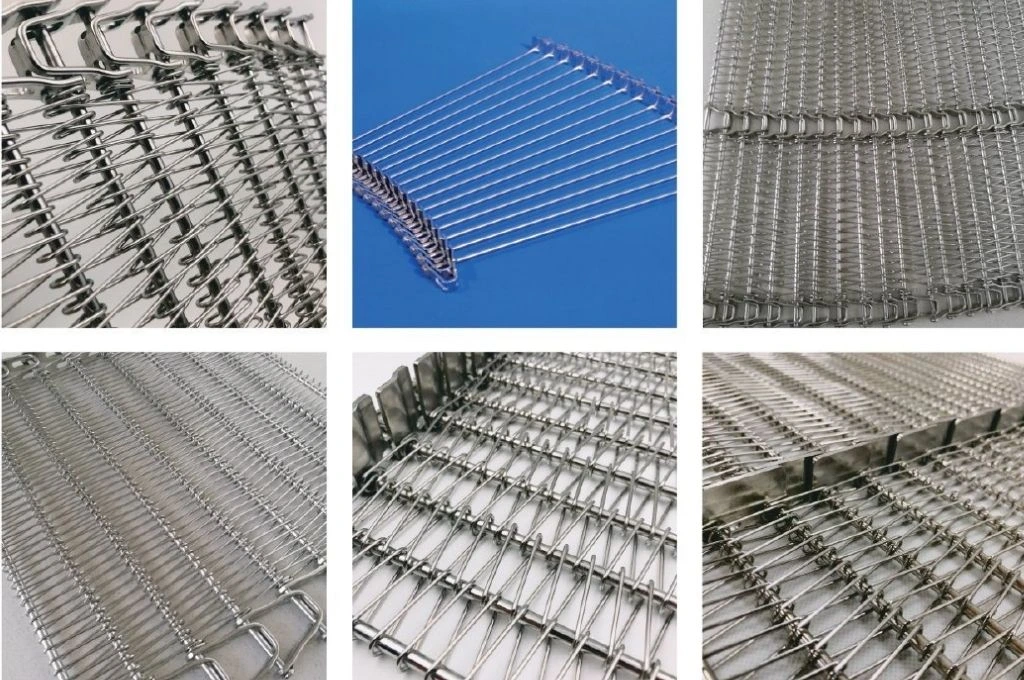
Spiral Grid Belt
Performance & Design
The Spiral Grid Belt is made with high-tensile wire using advanced digital mesh weaving for durability and shape retention. Its smooth surface and strong welds allow it to handle straight paths and 180° or 360° curves with ease. Designed for high pressure resistance and easy maintenance, it comes in various styles including mesh overlay, rod-only, side guard, and middle link options.
Industries
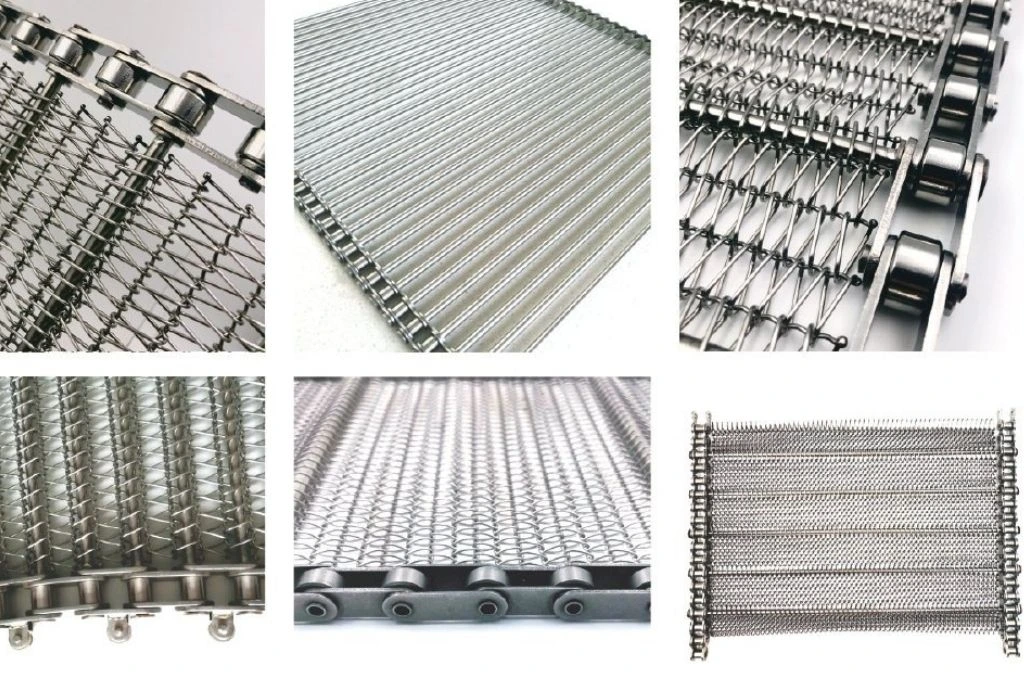
Chain Driven Belt
Performance & Design
Chain-driven belts consist of wire mesh, cross rods, and chains. The selection of mesh belt style, rod diameter, spiral pitch, and rod pitch is based on the type, shape, size, and weight of the product being carried. Chain model number and cross rod specifications are chosen according to the mesh belt width, length, running speed, and the conveyor belt's mechanical configuration. The operating temperature range is from 55° to 1150°. The chain mesh design also allows for the addition of side guards on both edges of the mesh belt and cross flights in the center of the mesh surface.
Industries
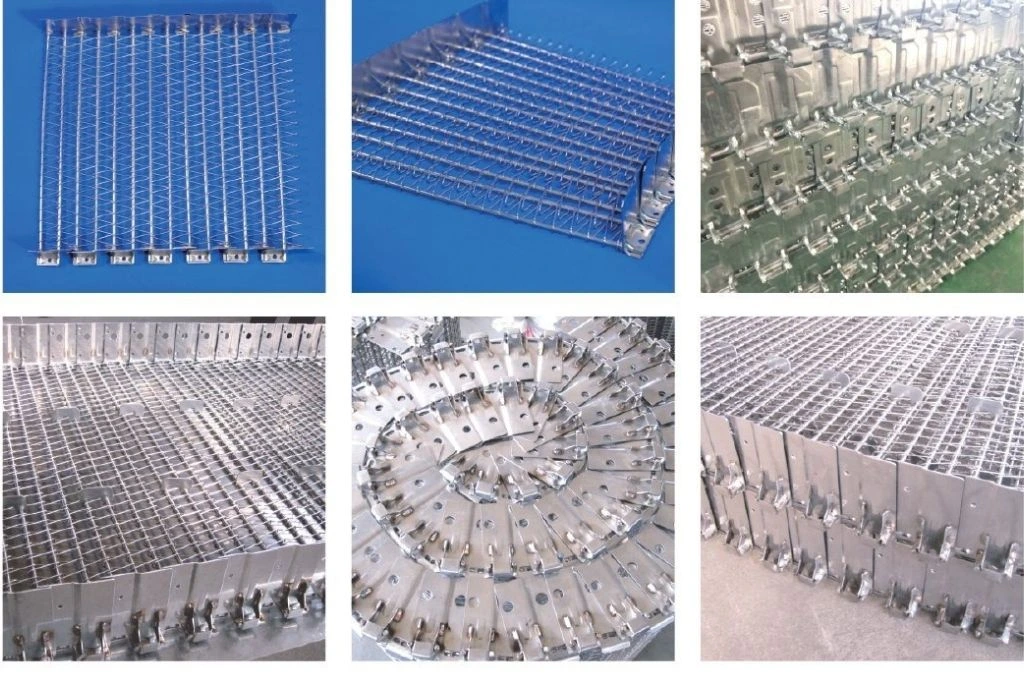
Self Stacking Belt
Performance & Design
The self-stacking belt is crafted using an imported digital mesh weaving machine and consists of wire mesh, cross rods, and plates, typically featuring unilateral spirals. It has a smooth surface and strong welds. The belt can run in either a counterclockwise or clockwise direction, with the ability to complete a full 360° turn in both cases.
Industries
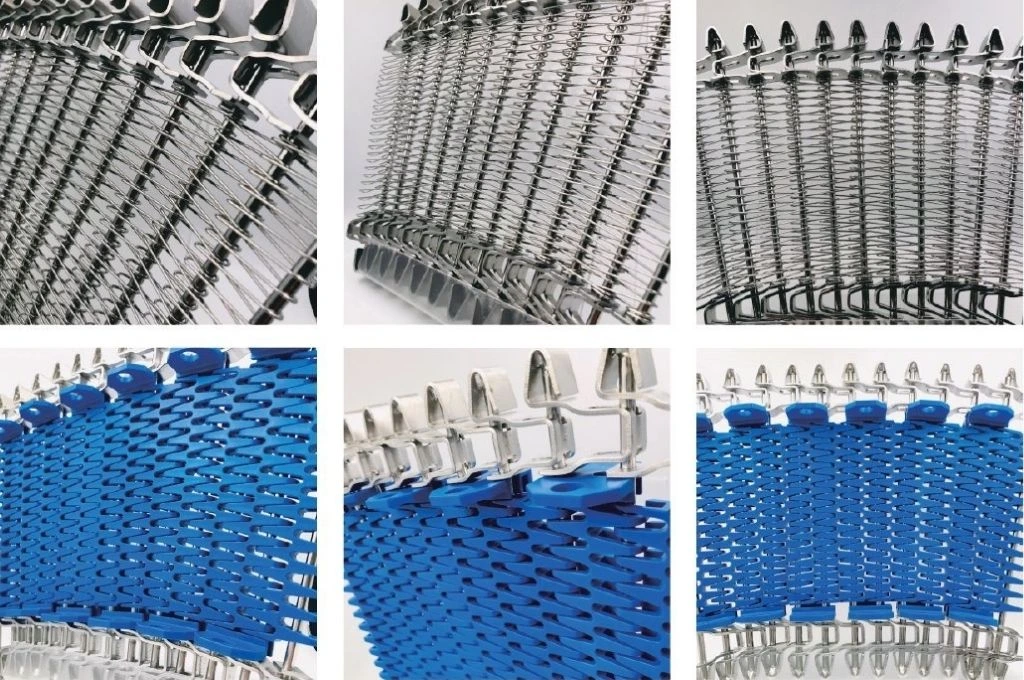
Side Drive Belt
Performance & Design
Side drive belts are crafted using an imported digital mesh weaving machine and consist of wire mesh, cross rods, and links driven by a sprocket. The mesh belt surface is smooth, durable, and resistant to wear. The mesh overlay can be made from either stainless steel wire or plastic molding. Driven by a side gear, the belt runs smoothly and can withstand heavy pressure and tension. Available in mesh overlay, rod-only, and side guard designs.
Industries
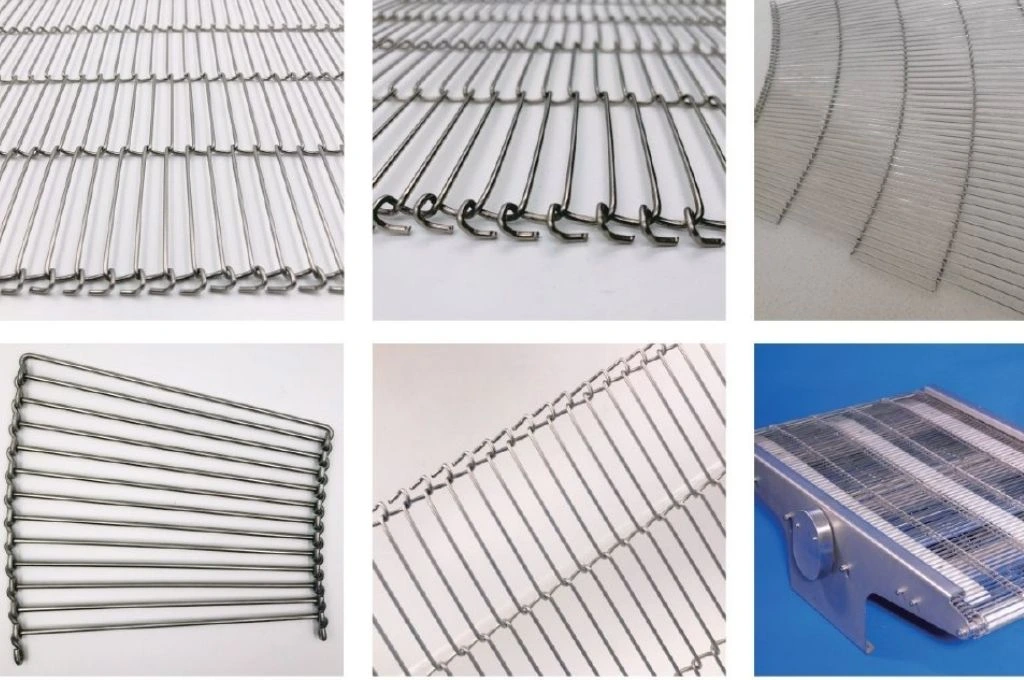
Flat Flex Belt
Performance & Design
The flat flex belt is produced using a digital mesh weaving machine and high-tensile stainless steel wire. It features a single-layer structure and is positively driven by sprockets. The edges are typically finished with a single loop, though stopper spirals can be manufactured upon request for special applications. Flat flex belts are commonly used in linear conveyors and can also be applied in turn conveyors. The mesh belt offers versatile configurations, with a single small solid structure or a double small side structure for specific purposes. The flat flex belt can run both straight and curved, including 90° and 180° turns.
Industries
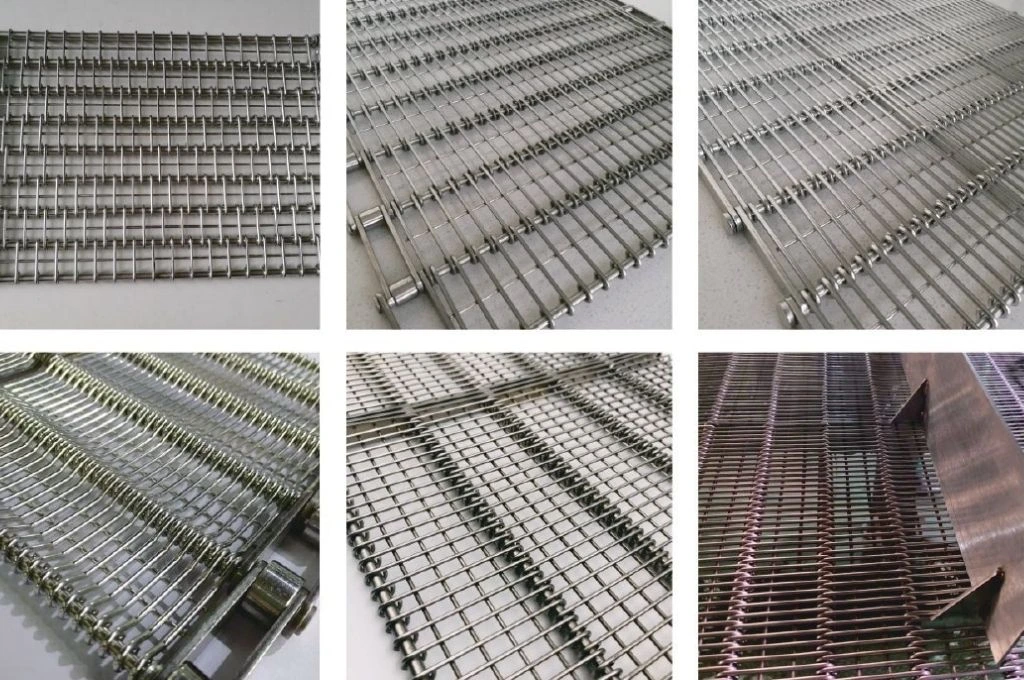
Eye-Link Belt
Performance & Design
The Eye-Link belt is made using an imported CNC digital mesh weaving machine. The wire is formed into an Eye-Link shape and joined with a rod. The high tensile strength of the wire rings enhances the durability of the mesh belt. The belt's edges can be finished with side and center flights to prevent products from falling to the ground.
Industries
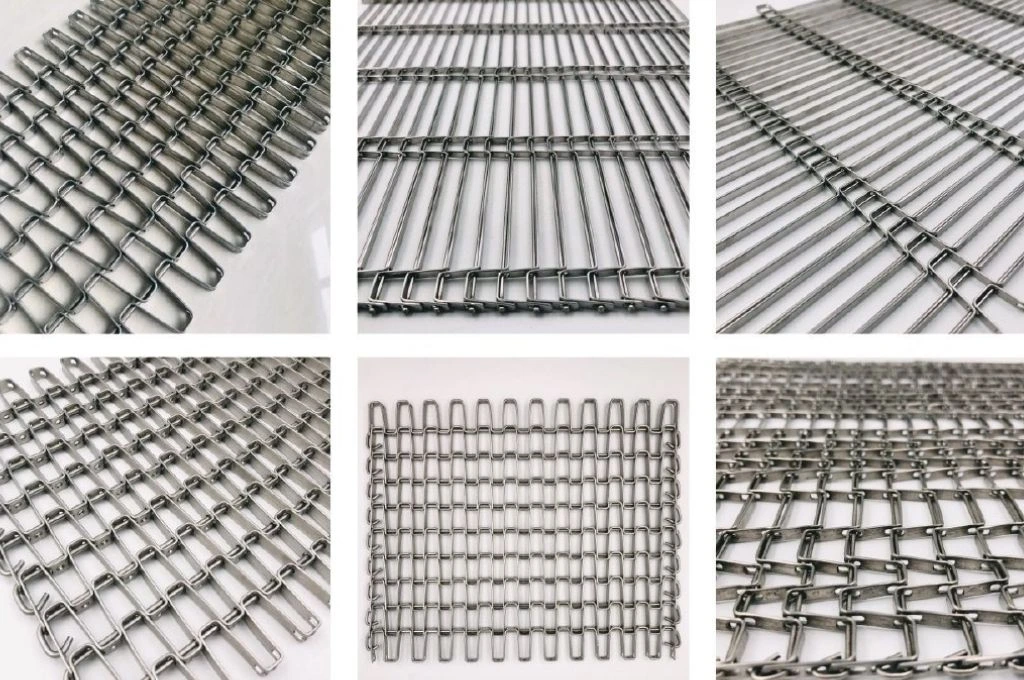
Flat Wire Belt
Performance & Design
Flat wire belt is constructed using cross rods and flat strips. The belt edge is finished with either a welded or clenched edge. Side guards and flights are available as options. It is easy to maintain and clean, and a long service life can be expected with proper use.
Industries
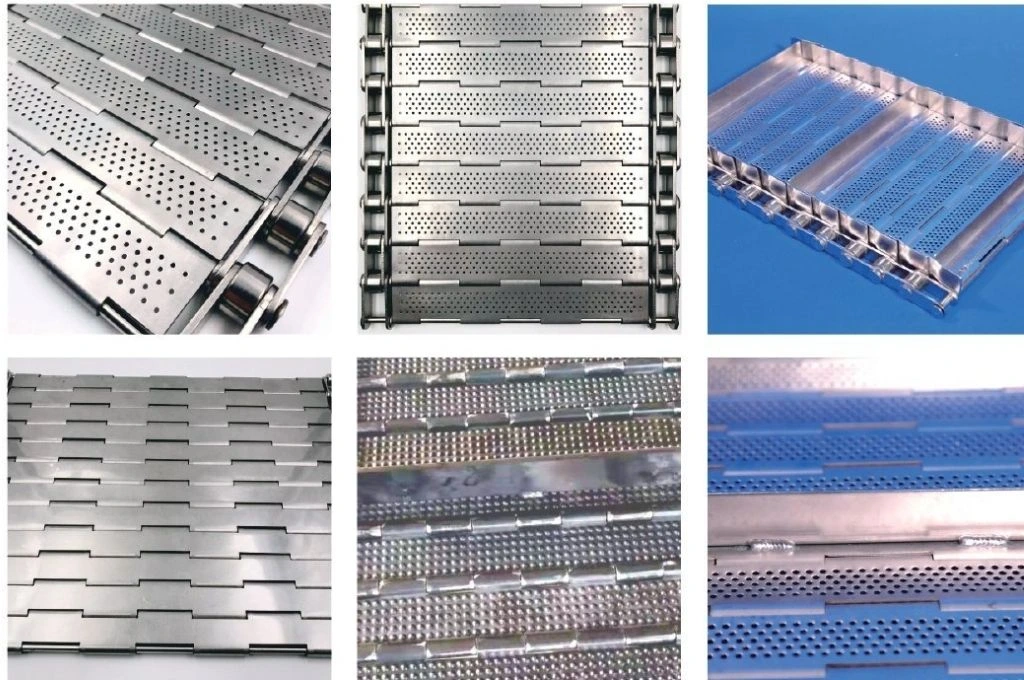
Chain Plate Belt
Performance & Design
The chain plate belt is a solid, metal belt driven by a sprocket, ideal for transporting small and high-density products. It features a self-supporting structure, allowing it to span wide widths without the need for additional support. This makes it highly durable, easy to maintain, and long-lasting. Perforations can be added to the plate according to specific application requirements. The chain edges can be secured using cotter pins or washers, depending on the mesh belt's width, length, running speed, and the mechanical configuration of the conveyor system. Based on these parameters, the appropriate chain model number and cross rod specifications should be selected. The design of the chain plate belt can also include side guards on both edges and cross flights in the middle of the mesh surface to enhance product handling and control.
Industries
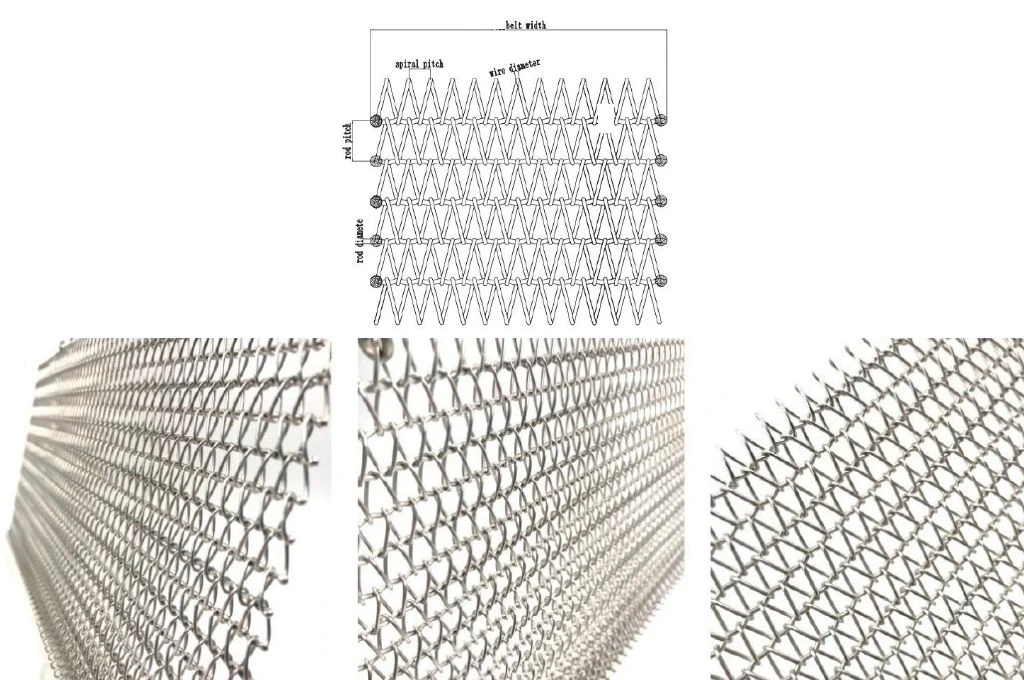
Balanced Weave Belt
Performance & Design
Balanced weave belts are constructed from alternating left- and right-hand spirals, assembled using pre-crimped or straight rods. They are available in both round and flat wire types, depending on the specific application. These belts are typically driven by friction, requiring a sufficiently large drive roller. However, for more precise movement and control, custom sprockets can be used to provide positive-drive engagement with the mesh. The belt pitch and mesh size can be customized according to the operating environment. Belt edges are generally finished by welding or clenching for added durability and safety. Crimped Rod Construction: This version features crimped rods that lock the spirals in place, maintaining alignment and preventing distortion or stress during operation. It offers the full range of benefits associated with wire mesh belts, including strength and stability. Straight Rod Construction: In this variation, alternating spirals are connected using straight rods. This creates a fine, evenly spaced mesh with minimal openings, ensuring smooth belt tracking and operation. Balanced weave belts are capable of handling high tension and are suitable for transporting heavy loads efficiently and reliably.
Industries
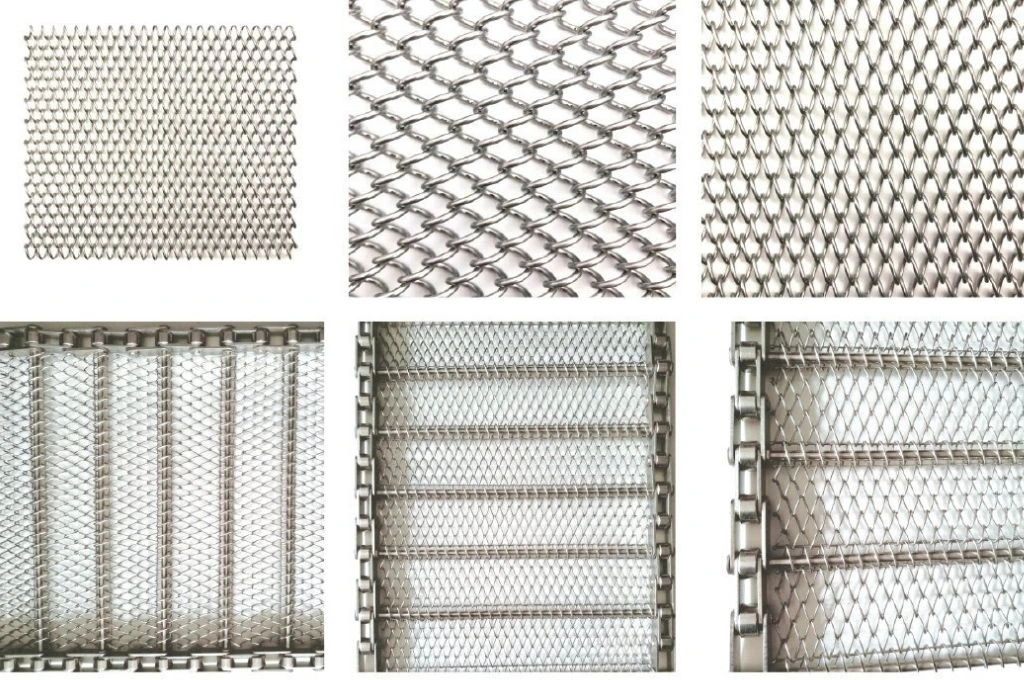
Conventional Weave Belt
Performance & Design
Conventional weave belts are made from single-direction spirals interwoven with adjacent spirals to form a uniform mesh. These belts offer excellent flexibility, smooth operation, and a large open area for optimal airflow and circulation. They are easy to install, maintain, and repair, making them ideal for continuous-use applications. Commonly used in food processing, electronics, and other light-to-medium duty conveying tasks.
Industries
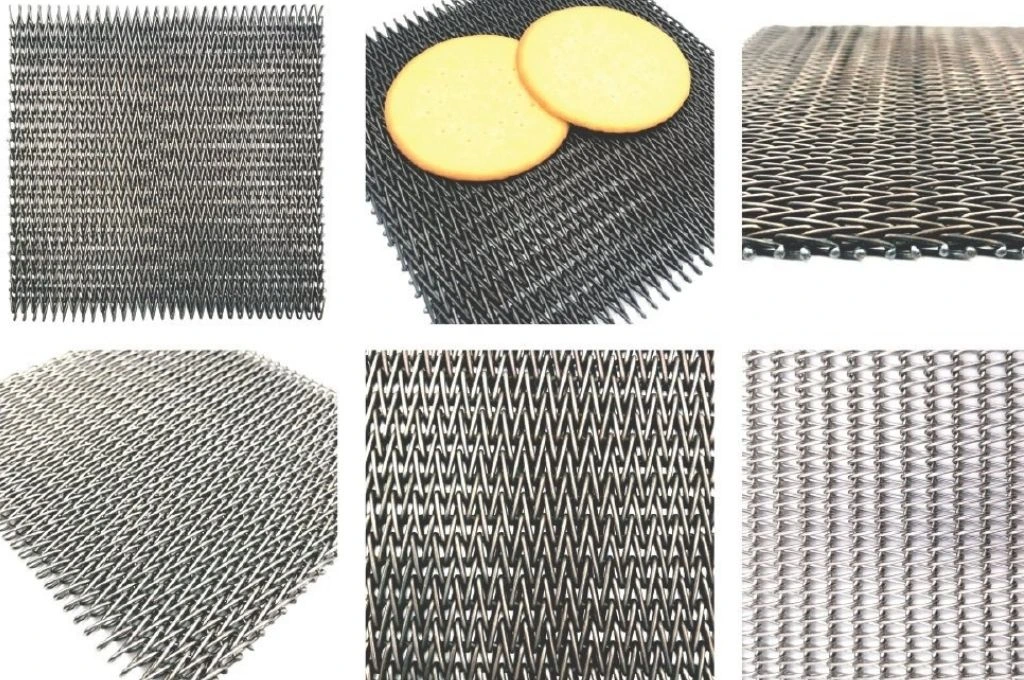
Ultra-thin Flattened Mesh Belt
Performance & Design
Designed specifically for the baking industry, ultra-thin flattened mesh belts offer a lightweight, compact structure with reduced thickness and low thermal inertia. This allows for faster heat transfer, efficient air circulation, and consistent baking performance. Constructed with high-strength materials, the belts maintain durability while offering excellent flexibility. Edges are looped or welded to ensure smooth contact with drums, especially small-diameter ones, and to protect against wear from side guides and scraper blades. An advanced manufacturing process ensures precise wire alignment, creating a mesh with a larger open area while maintaining strength. This design improves airflow, promotes even baking, and helps prevent product buildup for easier cleaning.
Industries
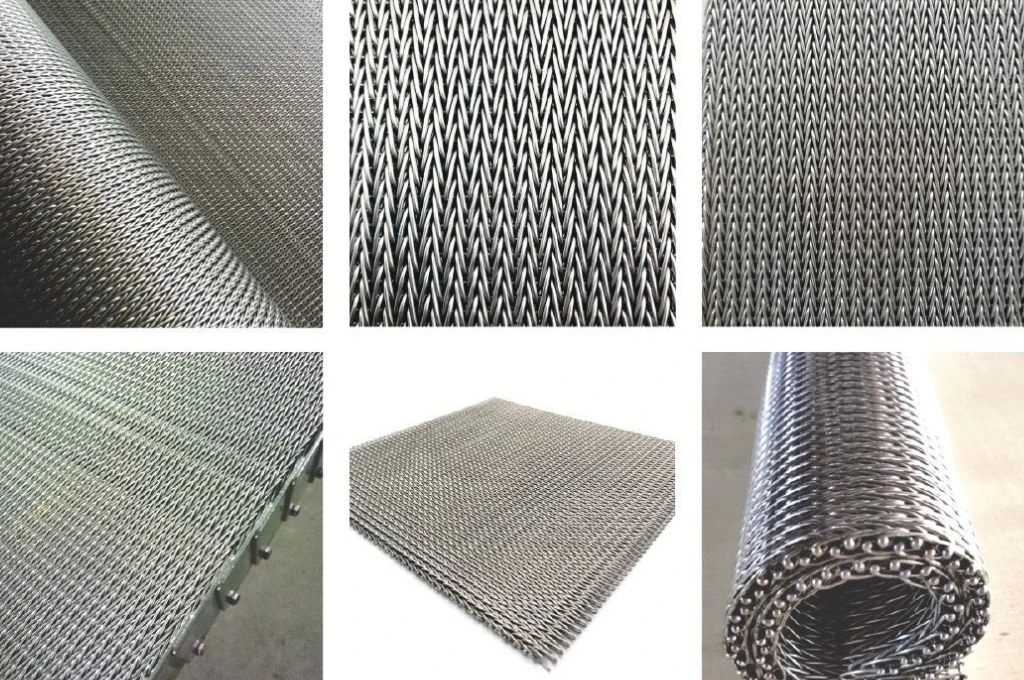
Compound Weave Belt
Performance & Design
Compound weave belts are a variation of the balanced weave design, featuring alternating right- and left-hand spirals combined with primarily straight rods and occasional crimped rods. This construction creates a dense, smooth, and tightly woven mesh surface. The high-density structure makes these belts ideal for conveying small or fine products such as screws, bolts, nails, cookies, chemical granules, and similar items that require minimal gaps in the belt surface..